
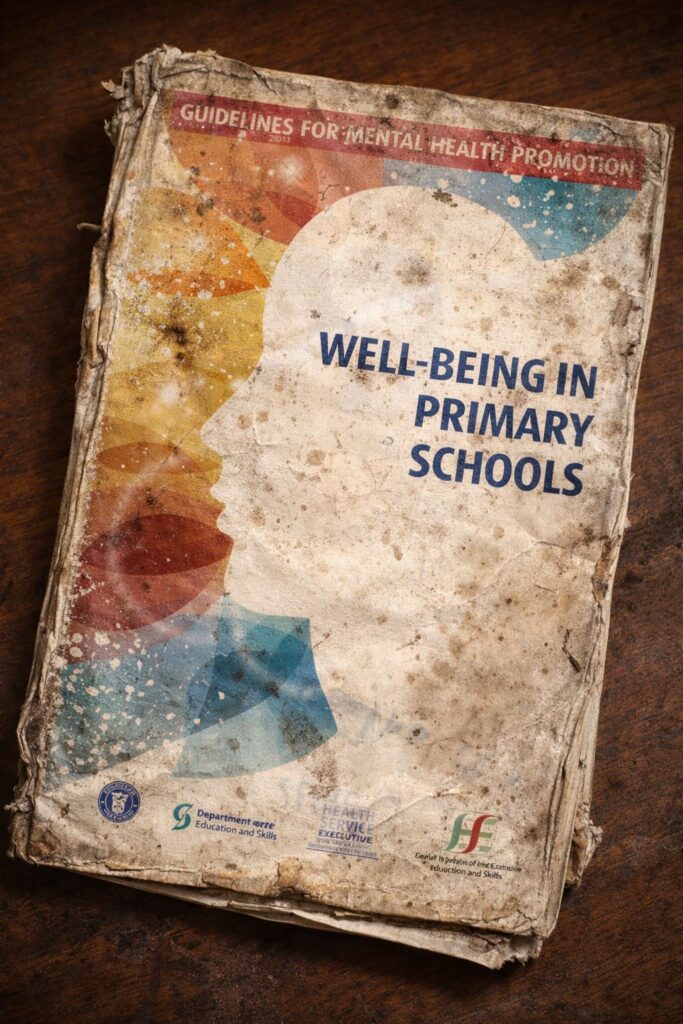
Bring Back 2016 Trend – Wellbeing, Without the Well
In 2016, the Well-being in Primary Schools Document appeared more or less out of nowhere. It set out four broad areas for schools: Culture and Environment, Curriculum, Policy and Planning, and Relationships and Partnerships. Schools were told to promote well-being for pupils and staff, embed it across school life, and evaluate their practice. There were no additional resources, no time allocation, and very little practical guidance. Well-being was declared a priority, but largely left to schools to interpret, implement, and absorb.
Somewhere along the way, the hyphen disappeared and the paperwork multiplied. What began as a broad, humane idea slowly became a bureaucratic exercise. Since 2016, wellbeing has appeared in:
-SSE guidelines, where it became a compulsory focus area
-School self-evaluation reports and action plans
-DEIS planning targets
-Child Protection and Anti-Bullying procedures
-Inspectorate frameworks
-SPHE reviews
-School climate surveys
-Staff wellbeing policies
Ironically, the administrative burden attached to “wellbeing” has made being well increasingly difficult for teachers and school leaders.
Wellbeing is now a formal curriculum area, complete with outcomes, progression continua, and expectations. In theory, this should bring clarity and coherence. In practice, it risks repeating the same mistake: taking something deeply human and turning it into something measurable, documentable, and auditable.
We all agree wellbeing matters. I’m just not convinced that turning it into another subject will make us any better at it.